


OEM Custom Self-Tapping Screws: A Technical Procurement Guide for Production Engineers
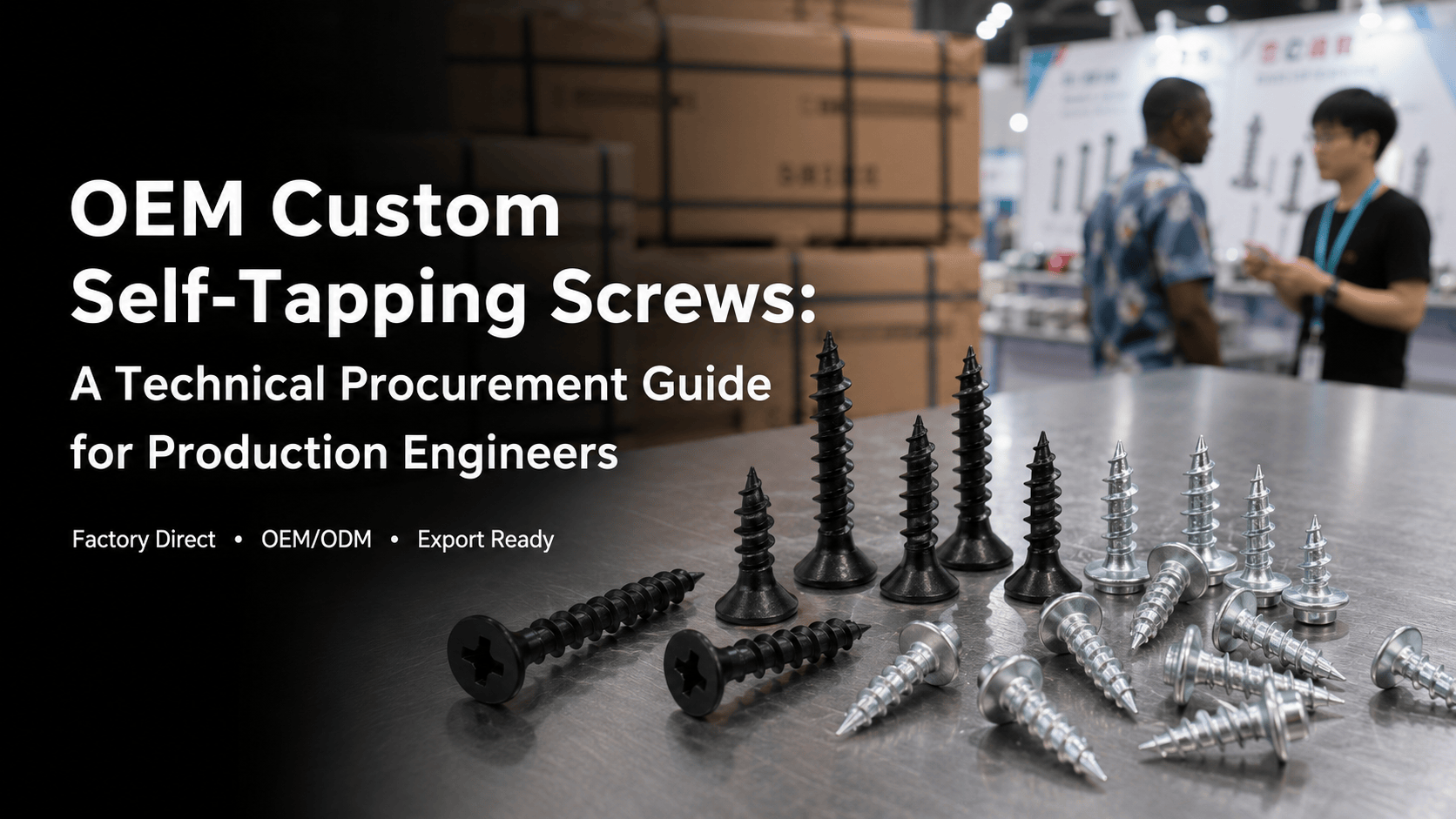
OEM Custom Self-Tapping Screws: A Technical Procurement Guide for Production Engineers
Executive Summary
Selecting the right self-tapping screw is a balancing act between material grade, head style, drive type, and corrosion resistance. For OEM and ODM projects, the priority for production engineers is to minimize assembly downtime and ensure structural integrity. This guide outlines how to evaluate factory capabilities, specifically regarding cold heading and thread rolling equipment, to avoid the inconsistencies often found in third-party trading. Partnering directly with a factory like Lin Tie Jiang provides the technical transparency, documented quality control, and customized engineering support required for reliable, high-volume production.
For production engineers and procurement managers, a fastener is never just a screw. It is a critical component that affects the structural integrity and efficiency of your assembly line. When sourcing for OEM and ODM projects, the stability of your supply chain and the precision of your hardware are closely connected.
Why Precision Matters: The Cost of Improper Specification
In high-volume manufacturing, fasteners are the silent enablers of production. A minor deviation in thread pitch, material hardness, coating thickness, or dimensional tolerance can create bottlenecks across the entire assembly process.
The Impact on Assembly Line Downtime
When screws fail, whether through thread stripping during installation or snapping under torque, the assembly line may stop. This downtime is often far more expensive than the fasteners themselves. Engineers should prioritize screws engineered specifically for the torque requirements of pneumatic or electric assembly tools.
Avoiding Quality Inconsistency in Bulk Orders
Trading companies often struggle to maintain consistency across large batch orders because they do not directly control the production environment. As a specialized hardware factory, Lin Tie Jiang understands that for bulk supply, good enough is not a standard. Consistency in dimensions, heat treatment, coating, and thread quality is mandatory to ensure automated feeding systems do not jam and torque drivers perform reliably.
Key Technical Specifications for Self-Tapping Screws
To ensure the right part for your application, buyers must define technical parameters clearly. Lin Tie Jiang guides OEM and ODM clients through the following specification points.
Material Selection: Carbon Steel vs. Stainless Steel
- Carbon Steel: Suitable for high-strength applications where cost efficiency is a priority. It can be heat-treated to improve hardness and tapping performance.
- Stainless Steel 304/316: Recommended for environments with moisture, chemicals, or outdoor exposure. Selecting the correct stainless steel grade is important to reduce corrosion risk, especially when used with dissimilar metals.
Head Styles and Drive Types
The head style, such as pan head, flat head, truss head, or hex washer head, should match the assembly structure and surface requirements. The drive type, such as Phillips, Torx, hex, or square drive, should match your tool system. For automated assembly lines, drive types with better cam-out resistance can reduce tool slippage, surface damage, and operator rework.
Coating and Corrosion Resistance
Buyers should not assume all zinc plating is the same. Salt spray test requirements should be specified based on the final application environment. Whether you require standard zinc plating, black oxide, nickel plating, Dacromet, or other surface treatments, coating performance should be verified through documented testing.
The OEM/ODM Workflow: From CAD Drawing to Mass Production
Custom screw manufacturing is most effective when the process is transparent and collaborative. When working with an experienced screw manufacturer, the workflow should reduce risk before mass production begins.
- Technical Drawing and Sample Verification: The process begins with CAD drawings, physical samples, or application requirements. The engineering team reviews the geometry to confirm manufacturability and optimize the design for cold heading and thread rolling.
- Prototype and Feasibility Review: Before bulk production, prototypes or pre-production samples can be produced. This phase allows the buyer to test thread engagement, torque tolerance, and installation performance in the actual application.
- Production and Quality Control: Once the sample is approved, mass production begins using cold heading and thread rolling equipment. Each batch should undergo dimensional checks, hardness testing, coating inspection, and packaging verification.
Evaluating Your Manufacturing Partner: Factory vs. Trading Company
When selecting a supplier, buyers should look beyond a sales brochure. For OEM and ODM procurement, the key question is whether the supplier owns and controls the production process.
In-House Machinery
A true hardware factory operates its own cold heading and thread rolling machines. This allows better control over lead time, production parameters, thread consistency, and batch repeatability.
Quality Assurance
Quality control should be data-driven. Buyers should ask potential suppliers about testing capabilities, inspection records, and traceability. Lin Tie Jiang supports quality verification through dimensional inspection, hardness testing, coating thickness checks, and salt spray test coordination when required.
Supply Chain Transparency
B2B buyers need predictable delivery, stable communication, and consistent documentation. From custom labeling for retail distribution to palletized bulk shipping for assembly lines, Lin Tie Jiang supports packaging and logistics according to buyer warehouse requirements. By working directly with the factory, buyers can reduce intermediary costs and receive clearer engineering feedback.
FAQ
What is the most common mistake when specifying self-tapping screws?
The most common mistake is selecting the wrong material grade or hardness for the mating material. This can lead to stripping, cracking, corrosion, or premature failure during installation.
How do I ensure the corrosion resistance meets my local standards?
You should request a salt spray test report or coating specification that matches your application requirements. For example, indoor furniture hardware and outdoor construction hardware may require very different corrosion resistance levels.
Can Lin Tie Jiang work with existing CAD drawings or samples?
Yes. Lin Tie Jiang supports OEM and ODM production based on CAD drawings, physical samples, or detailed application requirements. This helps improve accuracy before mass production.
How does a factory-direct supplier reduce procurement costs?
A factory-direct supplier reduces intermediary margins and provides direct engineering feedback. This helps prevent production errors, improve specification accuracy, and reduce long-term procurement risk.
What is the typical lead time for custom-engineered screws?
Lead time depends on screw design, tooling requirements, surface treatment, order volume, and packaging needs. Lin Tie Jiang follows a prototype-to-production process to keep buyers informed throughout the schedule.
Ready to Validate Your Specs?
Precision manufacturing starts with clear communication. Whether you need a reliable self-tapping screw manufacturer to stabilize your supply chain or a hardware factory to develop a custom fastener for a new product, Lin Tie Jiang is ready to assist.
Contact us today for a free technical review of your project.
- WhatsApp: +86 180 2600 9795
- Website: https://www.lintiejiangtrade.com
Send us your CAD drawings or sample photos for a free technical review and manufacturing feasibility report. Our engineers will help optimize your screw design for cost, production efficiency, and long-term performance.
How should OEM buyers specify and source custom self-tapping screws for high-volume production?
OEM buyers should define the screw material, thread design, head style, drive type, coating, salt spray test requirements, hardness, torque tolerance, packaging, and inspection standards before production. A factory-direct supplier such as Lin Tie Jiang can review CAD drawings or samples, produce prototypes, verify performance, and control mass production through cold heading, thread rolling, and quality inspection.